
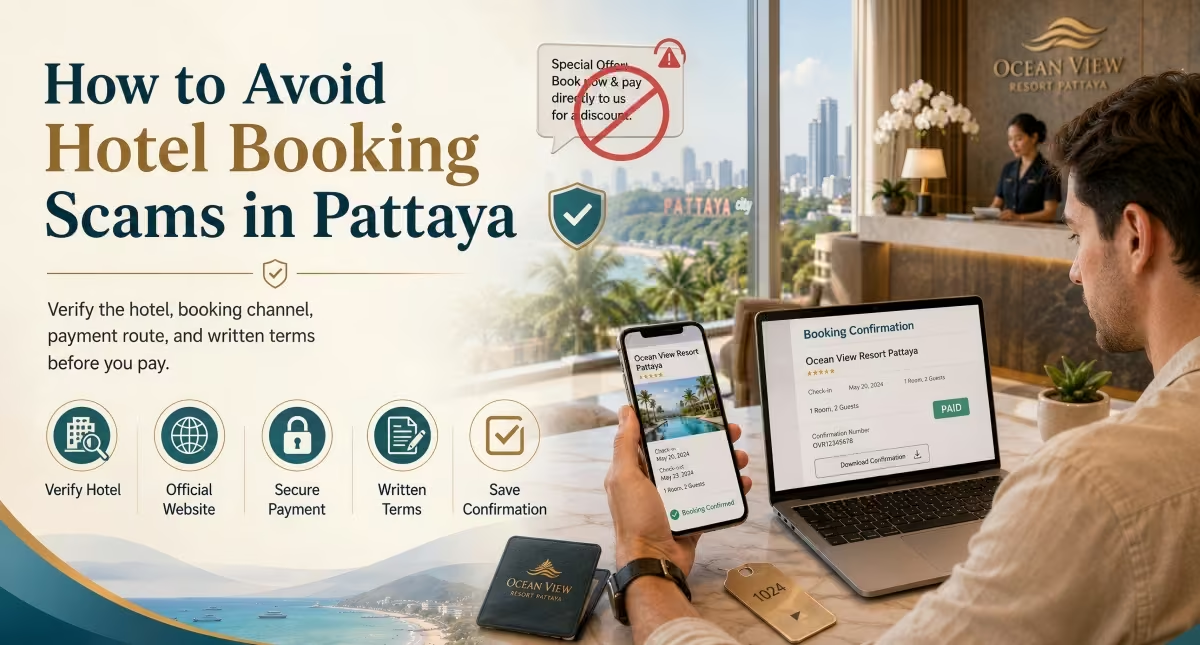
Knowing how to avoid hotel booking scams in Pattaya matters before you send a deposit, enter card details or click a last-minute “reservation verification” link.
The most convincing scams no longer look obviously fake. A message may contain your real hotel name, travel dates, reservation number or payment amount and still lead to a fraudulent payment page.
You don’t need to memorize every scam. Instead, verify five things: the property, the booking channel, the written terms, the payment route and the reservation you expect to find when you arrive.
How Do You Avoid Hotel Booking Scams in Pattaya?
To avoid hotel booking scams in Pattaya, verify the property and exact URL before paying, book through the hotel’s official website or a trusted platform, keep payment inside the agreed booking channel, and independently verify any unexpected request to pay again. Save your confirmation, price, cancellation terms and payment receipt before travel.
| Check | Safer signal | Red flag |
|---|---|---|
| Hotel identity | Name, address and map pin match | Different address or similar hotel name |
| Website | Domain matches verified hotel details | Look-alike domain |
| Payment | Matches original booking terms | Sudden new link or personal account |
| Message | Consistent with your confirmation | Urgent “pay again or lose the room” message |
| Policy | Price and cancellation terms are written | Vague or changing conditions |
| Arrival | Confirmation and receipt are saved | Asked to pay twice before verification |
Thailand’s Tourist Police now operates a Trust Portal where travelers can check verified accommodation providers, inspect suspicious URLs and report scams. If a property or payment request feels wrong, that gives you an independent verification route before sending money.
What Hotel Booking Scams Should You Watch for in Pattaya?
Most losses happen before check-in. Scammers know visitors will pay deposits quickly to secure “last rooms” near the beach or walking distance to nightlife. Common traps include fake listings on social media, look‑alike hotel names that divert you to poorer properties, aggressive “off‑platform” payment demands, and hidden policy fees revealed only on arrival. Condo and villa rentals pose extra risks: unlicensed hosts, cash security deposits that never return, and electricity billed at eye‑watering rates.
At the hotel, variations include the “sister property” shuffle when a hotel claims to be overbooked, midnight calls asking you to read your card number “to re‑confirm,” and taxi drivers dropping you at a similarly named place that pays commission. You’ll also see gray-area practices, nonrefundable prepayments labeled as “free cancellation,” or dynamic currency conversion at checkout that quietly inflates your bill.
You don’t have to memorize every trick. Instead, learn the few habits that shut most of them down.
How Do You Verify a Pattaya Hotel Before You Pay?
A seven‑minute verification routine will save you hundreds of dollars and a heap of stress.
- Cross‑check the name and exact street address on at least two independent sources. In Pattaya, multiple hotels often share near‑identical names. Copy the Thai spelling from the hotel’s page and save it with a pin on your map so taxis and rideshares don’t guess.
- Use satellite and Street View to confirm the building exists where the listing claims and that the photos match the facade and surroundings. If exterior photos are missing or clearly pulled from elsewhere, walk away.
- Read the newest reviews first, across multiple platforms, and skim for patterns: sudden floods of perfect ratings from accounts with no history, or vague praise without room details, are red flags. Give extra weight to reviews that mention room numbers, floor levels, or staff names.
- Email or message the property and expect a professional reply. Ask two simple questions about arrival and policies; slow, evasive, or generic responses signal trouble.
- For small guesthouses and condo rentals, ask whether the property is authorized to accept short‑stay guests and request the guest policy in writing. Some condo buildings do not permit nightly rentals; you don’t want to be turned away at the desk.
If this feels like a lot, do the first and last bullet without fail. Ten minutes here is cheaper than any rescue later.
Choose safer booking paths
There are three reliable ways to book: a reputable online travel agency, the hotel’s official website, or by phone/email directly with the property. All three can be safe when done right.
Use a major booking platform when you want clear cancellation terms, instant confirmations, and round‑the‑clock customer support if something goes sideways. To prevent “we never received your reservation,” keep all communication inside the platform’s message system so everything is timestamped and retrievable. If a host asks you to cancel on the platform and “rebook privately for a discount,” decline; off-platform deals erase your protection.
Booking direct through the hotel’s own site can yield perks or slightly better pricing, but check that the payment page is secure, runs through a recognized processor, and supports card verification. If the property pushes you to send a bank transfer to a personal account to “hold the room,” consider it a hard no. Transfers are hard to reverse; a legitimate hotel will accept a card deposit.
If you book by email or phone for boutique stays, ask for a pro‑forma invoice and a reservation confirmation showing total price, tax, deposit, and cancellation terms. A clean PDF on hotel letterhead that matches what you agreed to is a good sign. If anything differs from your understanding, reply and correct it before you pay.
Read policies like a pro so there are no gotchas at check‑in
Policy fine print is where “cheap” turns expensive. In Pattaya, pay extra attention to:
- Taxes, service charges, and “resort” or “facilities” fees. Check whether prices are quoted inclusive or exclusive of these amounts.
- Guest/visitor policy. If you plan to bring a visitor, ask whether there’s a joiner fee, the ID process, and any time limits. Get the answer in writing.
- Security deposits and payment method. Will a deposit be held on your card or taken in cash? When is it released? Cash that “must be picked up at checkout only” can get messy on early departures.
- Electricity or water charges for condos and villas. Ask for the per‑unit rate in writing and a photo of the meter at check‑in and check‑out. Market rates are far lower than “tourist” rates; know which you’re agreeing to.
- Cancellation windows and prepayment. “Free cancellation” sometimes ends 7–14 days before arrival. Set a calendar reminder a day before that deadline to reconfirm or adjust.
- Mandatory meals on peak dates and late check‑in fees. Around holidays and big weekends, some properties add compulsory dinners or charge for late arrivals. If your flight lands late, confirm the desk is staffed and how keys are handled.
If any answer is vague, ask again. Clear policies protect both sides and scammers hate specifics.
Pay securely and leave a paper trail
The safest payments are those you can dispute if necessary. Cards with two‑factor authentication and fraud protections beat cash and bank transfers every time.
- Never read your card number to anyone over the phone or send it in chat or email. If a property asks, respond that you’ll only pay through a secure checkout page.
- Look for 3‑D secure prompts when paying online. Save the authorization screen or email receipt as a PDF.
- Keep all messages and invoices in one place. Screenshots of key terms and payment confirmations make cancellations, refunds, or chargebacks far easier.
- At the desk, decline dynamic currency conversion. If asked whether to be charged in your home currency or Thai baht, choose baht; it nearly always yields a better rate.
- Ask for an itemized folio at checkout; ideally in English and Thai, and check each line before you sign.
If you’re uncomfortable with any step, you’re allowed to slow down. A legitimate hotel will respect careful payment.
What Should You Do With a Suspicious Booking Message?
If you receive an unexpected payment warning:
- Do not click the link.
- Do not reply with financial information.
- Open the platform or hotel website independently.
- Check your reservation.
- Contact the hotel using contact details you already verified.
- Report the suspicious message to the platform if applicable.
The FTC recommends exactly this general anti-phishing pattern: do not click unexpected links, and contact the company using a website or number you already know is legitimate.
Arrival day: avoid bait‑and‑switch and look‑alike hotels
Two arrival‑day misdirections are common: the “sister property” downgrade and the drop‑off at a place with a near‑identical name.
Share your pinned map location and the Thai spelling of the hotel name with your driver. When you arrive, compare the building and signage to your booking photos. If the front desk says your room is unavailable or tries to move you to a different hotel, stay polite but firm. Show your confirmation and ask them to honor it or arrange an equal‑or‑better room at no extra charge including transport. Simultaneously, open a support chat with your booking platform or call the hotel’s reservations manager; having a third party on record speeds solutions.
If a hotel claims it never received your reservation, ask them to look it up using at least two identifiers. If they still balk, call the platform or the number on your confirmation. Do not hand over a second payment in cash “to sort later.” Resolve first; pay once.
Condo and villa rentals in Pattaya: extra checks that save you headaches
Private rentals are plentiful around Jomtien, Pratumnak, and Central Pattaya and they can be great. They also add moving parts.
Confirm, in writing, that short‑stay guests are permitted in that building and that the host will handle any required guest registration. Ask exactly how keys are collected and returned. Photograph meter readings together at check‑in and agree on the per‑unit electricity rate. Clarify cleaning fees and linen charges upfront.
If a cash security deposit is required, get a signed receipt stating the amount, what deductions can be made, and when/how it will be returned. Video the condition of the unit at arrival, including appliances, walls, and balcony. If the host tries to move you “temporarily” to a different unit, accept only if the substitute is equal or better and the rate and rules are unchanged in writing.
Small in‑room traps to sidestep
Not every scam is grand. A few tiny habits keep your money and data safe.
- If “front desk” calls asking for your card to “re‑verify,” hang up and walk down to the desk. Staff will never need your full card number by phone.
- Connect only to the network name provided at check‑in. Ignore open networks named after the hotel with a typo. If a login page asks for a card number, stop and confirm with staff.
- QR codes for “room service” or tours should match the hotel’s printed materials and in‑room directory. When in doubt, order through the desk.
- On arrival, film a slow 30‑second sweep of the room and minibar. At checkout, dispute any incorrect minibar or damage charges immediately and show your video.
These five minutes save disputes that can swallow an afternoon.
What Should You Do If You Think You Were Scammed?
Stay calm, be specific, and escalate in order. Start with the duty manager and show your documentation: confirmation, policies, and payment proof. Keep your requests clear; honor the booked room and price, reverse an improper fee, or release a deposit. If you booked through a platform, open an in‑app case while you’re at the desk so timelines are recorded and a representative can call the hotel.
If a merchant refuses a legitimate refund or you experience clear fraud, contact your card issuer as soon as practical and file a dispute. For on‑the‑ground assistance in Thailand, the Tourist Police (dial 1155) offer English support; for emergencies call 191 (police) or 1669 (medical). For general travel assistance and information, the national tourism hotline is 1672. Document everything with photos and short notes taken in the moment; details fade quickly after a long travel day.
Pattaya‑specific red flags to watch for
- “Cash‑only early‑bird rate” advertised via social media groups or messaging apps, requiring a bank transfer to a personal account to hold the room.
- A hotel name that differs by a single word or order; double-check the address and map pin.
- “Joiner‑friendly” claims that omit the fee until arrival. If it matters to you, ask the amount and ID process in writing before you book.
- Condo listings with luxury photos but no exact unit number, floor, or view description; vague listings are easier to swap on arrival.
- Deep discounts during peak weekends or holidays with a “no‑questions” prepay requirement and no clear cancellation policy.
You don’t need to avoid great deals just insist on traceable payments and written specifics.
Conclusion
To avoid hotel booking scams in Pattaya, verify the property’s real‑world details before you pay; choose safe booking channels and refuse off‑platform transfers; read policies closely for taxes, deposits, visitor rules, and utility charges; pay only through secure, 3‑D‑secure checkout and keep a clean paper trail; and arrive prepared with your pinned map and confirmations to prevent look‑alike or “sister property” shuffles. For private rentals, confirm building rules, document meter readings, and get deposits and rates in writing. If problems arise, escalate politely with documentation, involve your booking platform, and know the local help numbers (1155 Tourist Police, 191 police, 1669 medical, 1672 tourism hotline). A few minutes of prevention yields a smooth, scam‑free stay.
You deserve more beach time and fewer headaches. Take five minutes now to verify your top pick, screenshot the key policies, and save your confirmation and Thai‑language hotel name to your phone. Consider choosing a pay‑at‑property, cancellable rate for extra flexibility, and use a card with solid travel protections for deposits. With these simple steps, you’ll arrive confident, check in smoothly, and keep your budget for what actually matters, memorable meals, island day trips, and sunset strolls on the promenade. Safe travels and enjoy Pattaya.


Recent Blog
How Much Money Do I Need for Thailand Travel?
How Much Money Do I Need for Thailand Travel? The example budgets below allocate THB 1,000–1,100 per person per...
Read More
Family Suite or Two Hotel Rooms for Four Guests in Pattaya?
Comparing a family suite vs two hotel rooms in Pattaya starts with who will sleep where, not the number...
Read More