
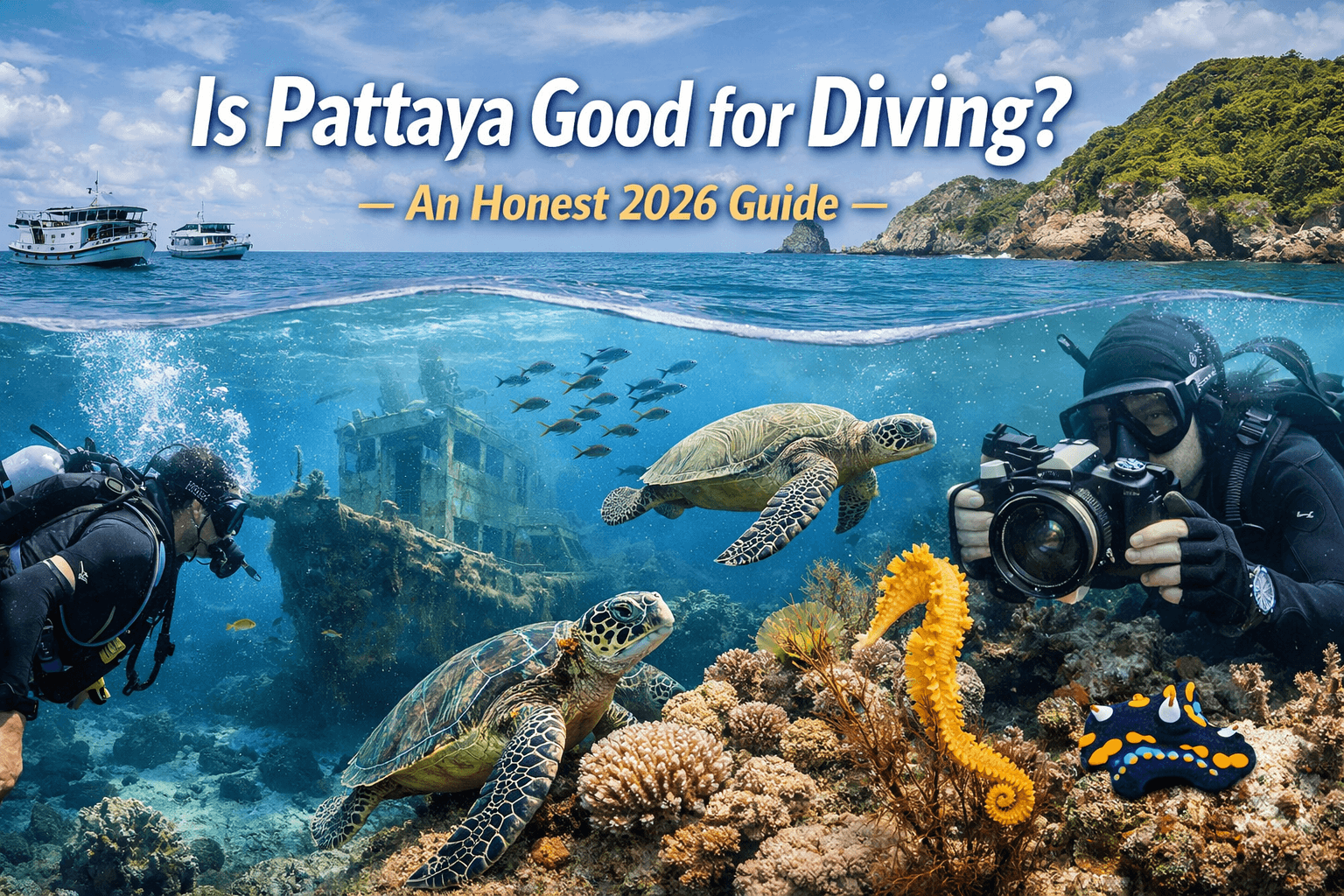
If you’re weighing up Thailand’s dive spots and wondering whether Pattaya deserves a place on your itinerary, here’s the straight answer: Pattaya diving can be fantastic for the right diver with the right expectations. It’s not the crystal-clear postcard of the Andaman Sea every day, but it delivers year‑round access, short boat rides, excellent wrecks, surprising macro life, warm water, and an easy commute from Bangkok. Get those pieces aligned, and your dives here can be memorable, skill-building, and genuinely fun.
This guide cuts through the hype and the hate. You’ll learn where to dive, when to go, what conditions to expect, who will love Pattaya most, and how to plan a high‑reward day on the water without wasting time or budget.
Is Pattaya good for diving?
Pattaya diving is ideal for divers who want easy access, warm water, and diverse dive sites. While visibility is not always crystal clear, diving in Pattaya offers wrecks, macro life, and year-round availability. Conditions range from mild to challenging, which is why many divers improve quickly here. They practice real-world navigation, buoyancy in light surge, and current management instead of only calm, tank-like diving.
Set your expectations honestly. Pattaya diving visibility typically ranges from about 5–20 meters depending on weather and location. That won’t impress every Instagram feed, but it’s more than enough to enjoy turtles, rays, seahorses, nudibranchs, and some of Thailand’s most accessible wrecks. If you want stress‑free logistics, warm water, and a legit chance to rack up diverse dives in a weekend, Pattaya is absolutely worth it.
If your time is tight, consider a far‑islands day trip with a wreck dive add‑on. It concentrates the best of Pattaya into one plan.
What makes Pattaya diving unique among Thailand dive hubs
- It’s open year‑round. While some Thai destinations shut down during monsoon periods, Pattaya boats head out most days. You’ll still want to watch the forecast, but outright cancellations are comparatively rare.
- It’s close and convenient. Fly into Bangkok or U‑Tapao, transfer 45–120 minutes, check in, and you can be on a boat the next morning.
- It’s a wreck lover’s playground. Multiple artificial-reef warships and historical wrecks lie within recreational depths, with deeper sites for tech divers a short drive down the coast.
- It’s underrated for macro. Look closely and you’ll find seahorses, octopus, dragonets, pipefish, and a parade of nudibranchs tucked into crevices and sand patches.
To stack the odds in your favor, tell your dive center what you care about, such as wrecks, turtles, or macro diving, and ask them to adjust the day’s plan to match your goals.
Where to dive around Pattaya: near islands, far islands, and Samae San
Pattaya’s “map” is usually split into three practical zones. Knowing the differences helps you choose the right boat for the right day.
Near Islands: fast, flexible, beginner‑friendly
The near‑island cluster (commonly around Koh Larn, Koh Sak, and Koh Khrok) sits closest to shore. Boat rides are short, schedules are flexible, and depths are comfortable for new divers. Expect hard and soft corals, sandy patches rich in macro life, and frequent turtle sightings. Visibility is the most variable here, but the trade off is convenience and more relaxed profiles, making it a great option for tune ups, refreshers, and first certifications.
Consider trying: a morning macro‑focused dive with a slow pace and a patient guide. You’ll see much more than on a quick lap of the reef.
Far Islands: clearer water and classic reef scenery
Farther offshore, sites often referenced around Koh Rin, Koh Man Wichai, and Koh Phai tend to offer better visibility and more defined reef structures, pinnacles, and boulder gardens. Mild to moderate currents are common. These dives suit confident Open Water divers and are excellent for Advanced Open Water training.
You might explore: a two‑tank far‑islands trip when the forecast looks calm. If your operator offers Nitrox, consider using it to extend your no‑deco time on slightly deeper reefs.
Samae San: wrecks, pinnacles, and deeper training
About 50 minutes down the coast lies Samae San, a small fishing area with access to some of the region’s most beloved wrecks and granite pinnacles. It’s a favorite for seasoned divers and for those pursuing wreck, deep, sidemount, or tech training. Depths vary widely, from ideal recreational ranges to advanced technical dives, so be clear about your certifications and goals.
Many readers choose a weekend split: one day at the far islands and one day at Samae San, so they can experience both reef and wreck highlights without rushing.
Wreck diving in Pattaya: highlights and certification tips
Pattaya earned a long‑standing reputation for wreck diving because the sites are close, plentiful, and generally within recreational range. Artificial-reef warships and historical ships rest in depths that suit Advanced Open Water divers, with some lines, buoys, or descent markers simplifying navigation. Typical stars include decommissioned Thai navy vessels and historic freighters in the Samae San area. Depths commonly sit in the 18–30 m range; some structures are a little deeper, and profiles can push the limits of air-based no‑deco dives.
- Minimum training: Advanced Open Water is strongly recommended to handle depth, occasional current, and overhead risks on the wreck’s exterior.
- Specialty value: Wreck, Deep, and Enriched Air (Nitrox) courses shine here. You’ll get authentic conditions and meaningful practice rather than “check‑the‑box” dives.
- Penetration: Only with proper training, equipment, and a guide qualified to lead it. If that’s not your level yet, stick to safe exterior tours as there is still plenty to explore.
Ask your operator which wreck best fits your certification and conditions that week. Many will sequence the day so you hit the wreck first and a reef second.
Pattaya diving visibility, seasons, and conditions you should expect
Water temperatures hover around 27–30°C (81–86°F) for most of the year, so a 3 mm wetsuit is enough for most divers. The classic “best window” runs roughly November through April (see our Best Time to Visit Pattaya guide), when seas are calmer and visibility trends higher. The Gulf’s monsoon months can bring swell and sediment that reduce clarity, yet Pattaya often remains diveable thanks to its geography and boat access to multiple leeward options.
Expectations to set:
- Visibility swings. Plan for 5–20 m. Far‑islands days on a calm forecast usually deliver the top of that range; near islands after a blow can be on the lower side.
- Mild to moderate current is common, particularly around pinnacles and channels. Good trim and an SMB are smart habits.
- Surface conditions can go from glassy to choppy within a weekend. Seasickness tablets are a small investment that save a day’s diving.
Loss‑aversion tip: Skipping weather checks and site selection is the quickest way to “miss” Pattaya. A 5‑minute chat with your operator about winds and tides can be the difference between OK and outstanding.
Marine life in Pattaya diving: turtles, macro critters, and occasional big surprises
Pattaya’s signature sightings include hawksbill and green turtles gliding over hard corals and sandy channels. Blue‑spotted rays shuffle in the sand, and you’ll find cuttlefish, octopus, and schooling fusiliers over current‑washed edges. Macro lovers fare especially well: seahorses cling to gorgonians and artificial structures, while nudibranchs pepper rock faces and old moorings. Look carefully at rubble and seagrass for pipefish and dragonets.
Every so often, the Gulf offers unexpected surprises such as dolphins on the way out, a passing whale shark, or a shy bamboo or small reef shark swimming along the edge of a pinnacle. Don’t bank on it, but do stay alert. A calm kick, a curious eye, and a camera set for either macro or wide will lift your odds of great shots.
Who will love diving Pattaya trip
You’ll likely love Pattaya if you:
- Want easy logistics from Bangkok with minimal travel downtime.
- Enjoy wrecks, turtles, and macro, and don’t mind working for the shot.
- Aim to build your skills in real diving conditions, including navigation, current handling, and buoyancy control.
- Value year‑round diving with learning‑rich variety.
You may be happier elsewhere if you:
- Require 30‑meter, gin‑clear visibility on every dive.
- Prefer long, lazy drifts over minimal current.
- Only have one single day in mid‑monsoon and aren’t flexible about sites.
Not sure? Many divers start with a far‑islands day. If you have fun, add Samae San for a wreck focus the next time.
How to plan a high‑reward Pattaya dive trip
- Prioritize the right zone. For clearer water, book the far islands on calm days. For wrecks, request a Samae San plan. Near islands are ideal for refreshers or macro hunts.
- Go early. Morning departures often mean calmer seas and less crowding.
- Ask about Nitrox. It’s useful on deeper reefs and wrecks, especially if you’re doing repetitive dives.
- Pick small groups. You’ll see more with a guide who can match your pace and keep a close eye on currents and critters.
- Pack smart. Reef‑safe sunscreen, a 3 mm suit or rash guard, an SMB, and seasickness tablets if you’re prone.
The far‑islands window after a settled spell can be special. If your calendar is flexible, don’t miss it, and shift your dives to align with that forecast.
Safety, skills, and responsible practices
Conditions are welcoming but real. Log a proper briefing, check currents before you jump, and keep your mask defogged so you can read your surroundings. Maintain neutral buoyancy over coral, spool out your SMB at safety stop if you surface away from the boat, and follow your computer conservatively on deeper profiles. During jellyfish seasons, a full‑length suit or skin can make the difference between comfort and distraction.
Environmental note: Pattaya’s reefs rebound best when divers keep fins high, avoid touching structures, and secure dangling gauges. Consider bringing a small trash clip. Many divers gently remove fishing line or plastic when it is safe to do so.
Getting there and practical logistics
Most international travelers land at Bangkok’s Suvarnabhumi Airport (BKK). From there it’s about a two‑hour road transfer to Pattaya, with public buses, private taxis, and shared shuttles available. U‑Tapao (UTP), roughly 45 minutes from town, serves a mix of domestic and regional flights and is handy if your itinerary lines up.
Dive days typically run as two‑tank morning trips with light lunch onboard. Boat rides range from about 30–45 minutes (near islands) to 60–90 minutes (far islands); Samae San days involve a short transfer down the coast followed by local boat hops to the wrecks and pinnacles. Accommodation spans beach guesthouses to full‑service hotels; booking within walking distance of your dive shop or pier keeps mornings simple.
Share your certification cards and recent dive log when you book. Your operator will use this to place you on the right boat with the right guide.
Conclusion
Pattaya is a smart, skill‑rich dive base within easy reach of Bangkok. Expect warm water, variable but usable visibility, a mix of nearby and far island reefs, and some of Thailand’s most accessible wrecks. You’ll also find great macro diving opportunities for those who take it slow and look carefully. To get the best of it, align your plan with the forecast, choose the right zone for your goals, consider Nitrox for deeper profiles, and dive with a small group that matches your pace. If you value convenience, variety, and steady progress as a diver, Pattaya is more than just good. It is one of the most efficient ways to fit high-quality diving into a short trip.
Quick answers to common questions
Is Pattaya good for beginners?
Yes. Near‑island sites are shallow and calm enough for Try Dives and Open Water courses, with warm water year‑round.
Is it worth it if I only have one day?
Yes, choose the far islands on a calm forecast or request a wreck + reef combo if your operator offers it.
What’s the best time of year?
ef combo if your operator offers it.
What’s the best time of year? You can dive any month; November–April usually brings calmer seas and clearer water.
Will I see turtles?
Often. They’re regulars across near and far islands. Macro life is also a strength if you slow down.
Recent Blog
Pattaya Walking Street Guide 2026: Costs, Nightlife & Local Tips
Thinking about a night out on Pattaya Walking Street? Good call. It’s Thailand’s most famous nightlife strip for good...
Read More
Bangkok to Pattaya Tour Package – 5-Day Itinerary & Cost Guide
If you’re torn between Bangkok’s gleaming temples and Pattaya’s soft‑sand shores, a combined Bangkok to Pattaya tour package is...
Read More